
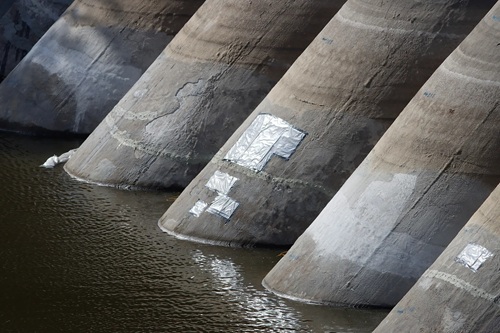
California faces growing risks from aging dams just as El Niño threatens heavy rain. The State Auditor warns that dams near the Bay Area, San Diego, and Los Angeles pose significant public safety hazards.
Since the Oroville spillway failure in 2017, lawmakers empowered the state to penalize dam owners who violate safety rules. Yet, water managers have not used that power. The audit shows that enforcement remains weak despite referrals of 44 dams for violations.
Many dams are over 50 years old, built under less strict safety standards. Owners often lack funds for repairs because state law never required them to set aside money for maintenance. Concrete crumbles and sediment builds up, increasing risks during storms.
The Department of Water Resources oversees more than 1,220 dams, mostly in satisfactory condition. But 57 dams now rate poor or unsatisfactory, up from previous counts. Forty dams pose high or extremely high hazard, mostly near coastal cities.
Failure of these dams could threaten 1.5 million people and cause over $265 billion in damage. One dam has a 47-foot-wide hole in its spillway, unrepaired for 30 years, putting hundreds at risk. The audit urges stronger enforcement and clearer deadlines.
Staff shortages and legal concerns hinder enforcement actions. Even with authority, the state cannot act before a dam reaches emergency danger, leaving a gap that puts people at risk.
Funding for repairs falls short of needs. A recent $464 million state grant and a federal award total less than $1.1 billion. Repair costs could reach $28 billion.
The audit calls on lawmakers to require dam owners to submit maintenance plans and expand enforcement powers. It recommends allowing the state to order dam closures if owners fail to act.
The Department of Water Resources disagrees with some findings but reviews the recommendations and prepares for El Niño. Protecting public safety remains its top priority.
Emergency plans for 245 dams remain incomplete, lacking state approval. Without deadlines, many owners delay updating plans that could save lives in case of failure.
As rain approaches, California faces a test of its dam safety system and the choices lawmakers and owners make to protect communities.