
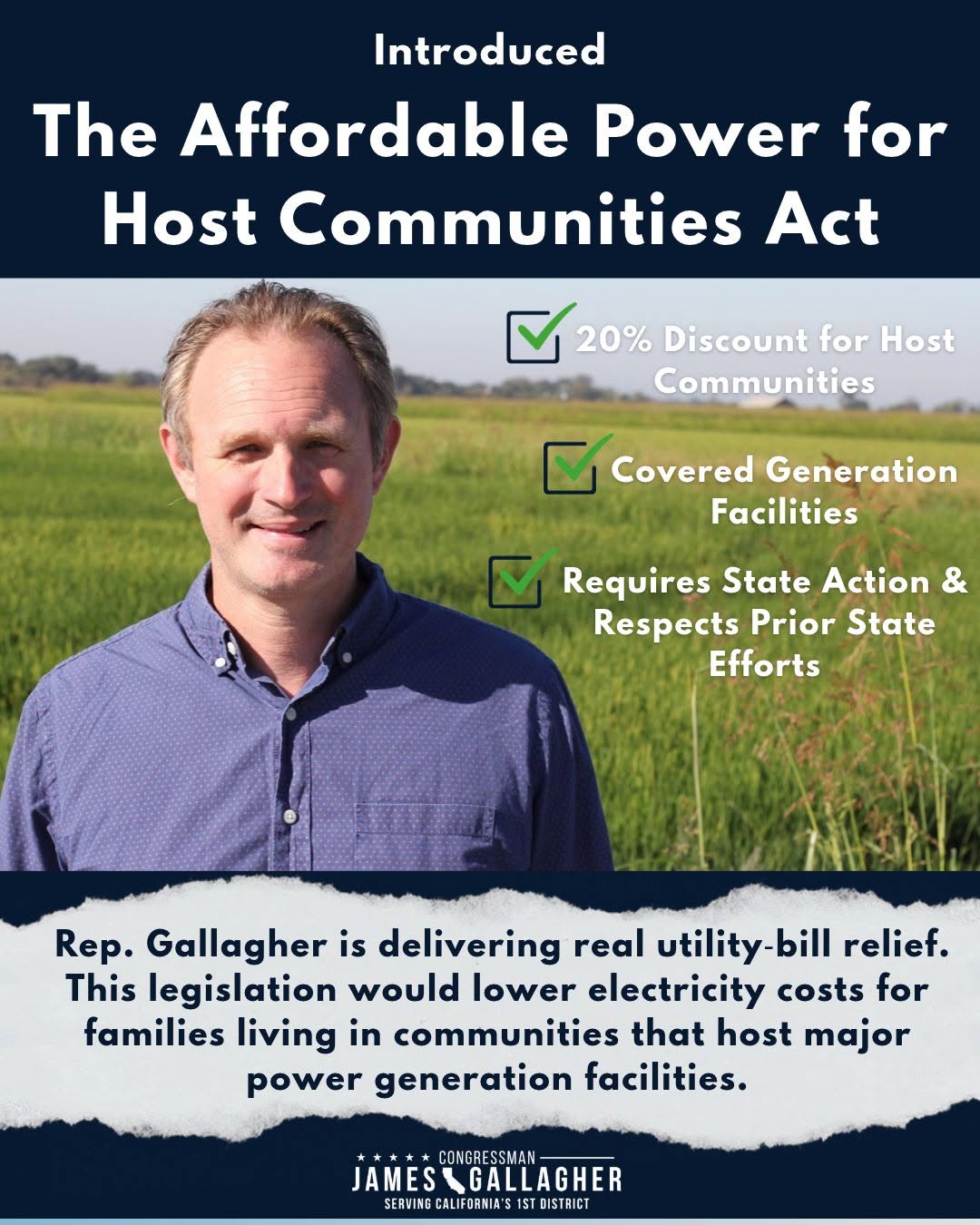
Communities bearing the burden of hosting California’s power plants and energy infrastructure could soon see direct relief on their monthly utility bills under a new legislative proposal aimed at lowering local energy costs.
The Affordable Power for Host Communities Act would require state regulatory agencies and public utility companies to consider providing a 20% discount on electricity bills for residents living in counties that host major power-generating facilities.
The rationale behind the proposal is straightforward: regions that endure the environmental, visual, and operational impacts of hosting power generation should share in the financial benefits of the energy they produce.
“The communities that power California shouldn’t be stuck paying some of the highest electricity bills,” the author of the bill stated. “That’s why I introduced the Affordable Power for Host Communities Act… If your community helps keep the lights on, you should see some relief on your power bill.”
Equity in Energy Costs
California residents currently face some of the highest retail electricity rates in the nation, driven by wildfire mitigation costs, grid modernization, and the state’s aggressive transition toward 100% clean energy. However, these costs are often distributed unevenly. Rural and industrial counties frequently host natural gas plants, solar farms, wind developments, or hydroelectric facilities that transmit power across hundreds of miles to high-demand urban centers.
Under the proposed legislation:
-
Utility Oversight: State public utility commissions and power providers would be mandated to evaluate and implement host-community discount structures.
-
Direct Consumer Relief: Eligible residential and business customers located within host counties would receive up to a 20% reduction on their standard power rates.
-
Local Benefit Preservation: The discount aims to ensure energy-producing counties retain a tangible economic advantage for supporting California’s broader energy grid.
If passed, the legislation could establish a precedent for how states balance local community impacts with regional power generation as infrastructure continues to expand across the state. The bill now heads to legislative committees for initial reviews and public hearings.