
Lassen Fire Safe Council to Resume Hazardous Fuels Reduction Work Near Paiute Lane and Upper Susanville Ranch Park
Susanville, California – Lassen Fire Safe Council, Inc. (LFSC) is resuming hazardous fuels reduction work in the Paiute Lane area within and adjacent to the upper Susanville Ranch Park. Work will consist of hand thinning brush and small trees with chainsaws and processing with a track-mounted chipper.
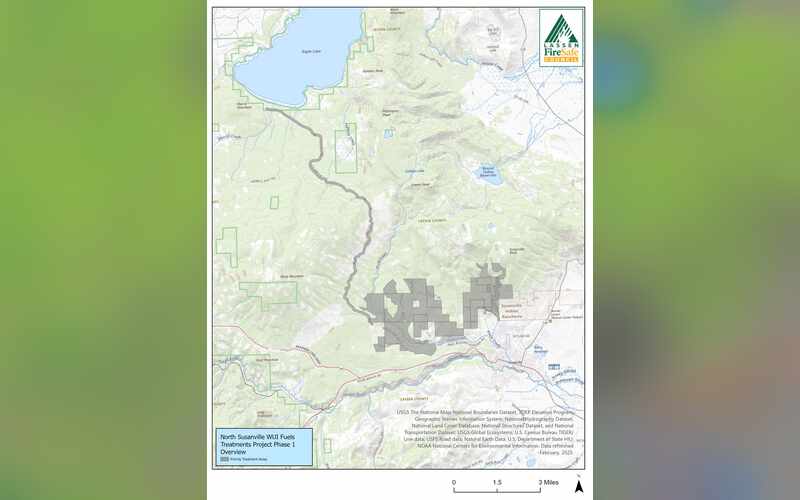
This effort is part of the larger North Susanville WUI Fuels Treatment Project, funded through a CAL FIRE Wildfire Prevention Grant. The project aims to reduce hazardous wildfire fuels throughout the landscape north of Susanville, establish and maintain strategic fuel breaks, and remove dead and dying hazard trees adjacent to public and private infrastructure.
The North Susanville WUI Fuels Treatment Project extends from Eagle Lake Road (County Road A-1) to upper Susanville Ranch Park near Paiute Lane. To date, approximately 2,290 acres have been treated to reduce hazardous wildfire fuels.
Work within the Susanville Ranch Park is scheduled to begin next week and is expected to last up to two weeks. Park visitors and trail users are advised to use caution while crews are operating in the area. Operations will occur Monday through Friday, from early morning through mid-afternoon. LFSC is making every effort to minimize impacts on park users while completing this critical wildfire risk reduction work.
For more information, visit lassenfiresafecouncil.org.
Lassen Fire Safe Council holds monthly public meetings at 5:30 p.m. on the third Wednesday of each month at the Susan River Fire Protection District, 705-145 US Highway 395, Susanville, California.
Funding for this project is provided by CAL FIRE’s CCI Wildfire Prevention Grants Program. California Climate Investments puts billions of dollars of Cap-and-Trade auction proceeds to work reducing greenhouse gas emissions, strengthening the economy, improving public health and the environment, and providing meaningful benefits to the most disadvantaged communities and low-income communities and households.
Submitted by Cade Mohler.