
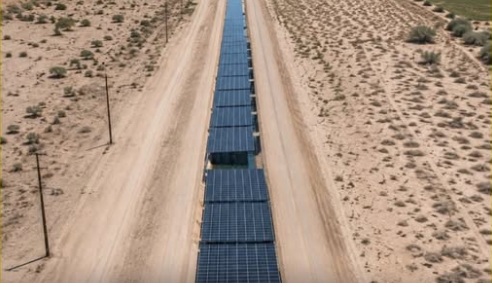
In Arizona, the Gila River Indian Community has covered approximately 2,782 feet of the Casa Blanca Canal with about 2,556 solar panels.
The 1.31-megawatt installation is expected to produce at least 2.26 million kilowatt-hours of electricity each year for the Community. It became the first operational solar-over-canal project of its kind in the United States.
The idea is remarkably simple: put solar panels over infrastructure that is already carrying water.
The panels provide shade over the canal, which can reduce evaporation under Arizona’s intense desert sun. Researchers are also studying whether the cooler environment above the water can improve solar-panel performance compared with extremely hot conditions on land.
Just as importantly, the project produces electricity without requiring a new piece of land to be covered by a conventional solar farm. The canal was already there. Now the same space can move water and generate renewable energy.
The project also carries a deeper history.
For generations, the Akimel O’odham and Pee Posh people of the Gila River Indian Community fought over water rights after upstream diversions had severely affected the Gila River’s flow to their lands. In 2004, Congress approved the Gila River Indian Community Water Rights Settlement, providing the Community with an assured water allocation and resources to develop its water infrastructure.
Today, that infrastructure is being used in another way.
The Community is exploring how solar-over-canal technology could eventually be expanded across much more of its irrigation system. The Casa Blanca installation itself is a five-year pilot intended to provide data for future projects, with plans examining coverage of as much as 18.5 miles of canal.
It is a remarkably practical idea: use infrastructure that already exists, conserve a scarce resource and produce renewable energy from the same space.
The water keeps moving.
The panels keep producing.
And the land doesn’t have to be used twice.