
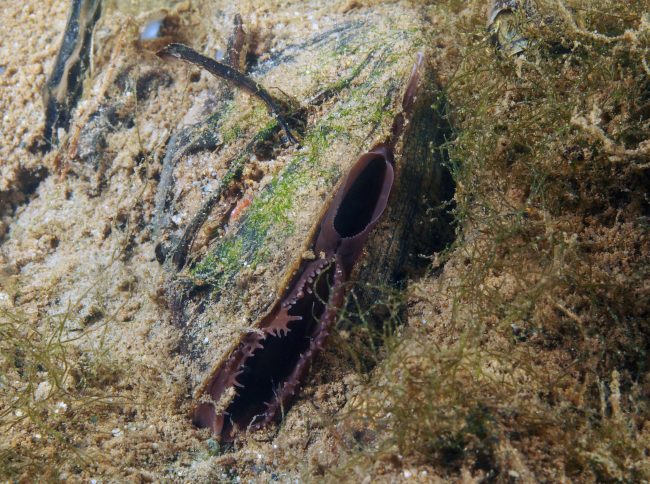
The Center for Biological Diversity announced it sued the U.S. Fish and Wildlife Service June 9 for failing to decide whether western ridged mussels should be protected under the Endangered Species Act. The center notified the service of its intent to sue in March.
“Western ridged mussels are sliding toward extinction and it’s clear they won’t get any help from the Trump administration without this lawsuit,” said Meg Townsend, a freshwater attorney at the center. “It’s hard to tell whether this administration hates the natural world or science more, but we won’t let these little, yet important, mussels become its latest victim. Every year that endangered species protections are delayed puts more populations at risk and makes recovery harder.”
The agency missed a legally required deadline to determine whether safeguards are warranted for the freshwater mussels, which are disappearing from rivers across Oregon, Washington, California, Idaho and Nevada. Many historical sites no longer support mussels, and many local populations no longer successfully reproduce. In California, one of the 17 locations of live mussel observations since 1990 is Last Chance Creek in the East Branch North Fork Feather River watershed, according to a report from the Xerces Society for Invertebrate Conservation.
To date, the Trump administration has not protected a single new U.S. species under the Endangered Species Act in its second term, said the center. This is the first time an administration has failed to protect a species in its first year since 1981. More than 400 species are waiting for protection decisions.
Freshwater mussels are among North America’s most imperiled animals, yet they play an outsized role in keeping rivers healthy, said center scientists. Western ridged mussels filter algae, bacteria and pollutants from waterways, helping maintain clean water for fish, wildlife and people.
“Western ridged mussels are extraordinary animals that can live for decades while quietly filtering and cleaning our rivers, but they’re quickly vanishing,” said Townsend. “When mussels disappear, it’s often a warning sign that entire aquatic ecosystems are unraveling. Protecting the Western ridged mussel would help safeguard rivers that also support salmon, wildlife and communities throughout the West.”
The June 9 lawsuit seeks a court order requiring the service to issue the overdue finding for the mussel and comply with the Endangered Species Act.
Background
Western ridged mussels are native to rivers and streams throughout the western United States, including the Columbia and Snake river basins. Adult mussels spend most of their lives partially buried in river sediments and move only short distances.
Individual Western ridged mussels can live for decades, sometimes up to 60 years. Like many freshwater mussels, Western ridged mussels rely on native fish to reproduce. Their larvae, known as glochidia, must temporarily attach to the gills or fins of native fish to develop before dropping to the riverbed and growing into adult mussels.
This dependence on host fish makes Western ridged mussels especially vulnerable to dams, habitat fragmentation and declining water quality. Dams that block fish migration and other disruptions to river ecosystems can threaten the mussels’ survival.
Western ridged mussels have declined across much of their historic range because of river damming, degraded water quality, climate-driven drought and invasive species such as zebra and quagga mussels, said the center. Scientists say losing Western ridged mussels and the water filtration and nutrient cycling functions they provide can have cascading impacts throughout entire river ecosystems, affecting fish, wildlife and water quality.