
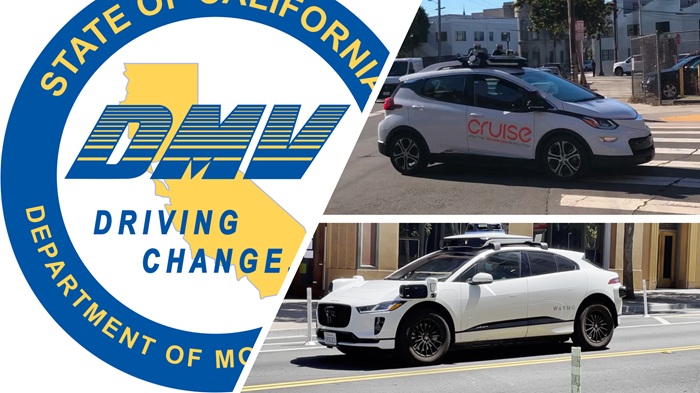
The California Department of Motor Vehicles (DMV) today announced the adoption of new autonomous vehicle (AV) regulations. These rules, the most comprehensive AV regulations in the nation, are the result of an extensive public comment and review process. Under the updated regulations, AV manufacturers may now apply for permits to test and deploy heavy-duty autonomous vehicle technology on California roadways.
The rules also expand safety and oversight requirements for all classes of AVs, enabling law enforcement agencies to cite AV companies for moving violations committed by their vehicles, requiring AV companies to respond to first responder calls within 30 seconds and authorizing local emergency officials to issue electronic geofencing directives to clear AVs from active emergency zones. Under the regulations and implementation of AB 1777, local government emergency officials may issue a temporary “do not enter” or “restricted area” zone to manufacturers in response to a public safety issue. AVs are not permitted to enter this area for the duration of the incident. Any AV already inside the zone must exit and no additional AVs may enter. AVs that violate this restriction may be subject to permit restrictions or suspension, depending on the circumstances of the incident. The regulations establish enhanced safety readiness criteria in the permitting process, new standards for remote operations personnel and broader data reporting and enforcement tools.
“California continues to lead the nation in the development and adoption of AV technology, and these updated regulations further demonstrate the state’s commitment to public safety,” DMV Director Steve Gordon said. “These updates support the growth of the AV industry by enhancing public safety and transparency while adding additional accountability for AV manufacturers.”
Highlights
- Permitting Criteria:Requires manufacturers to begin with testing using a safety driver and progress to driverless testing before applying for commercial deployment. Manufacturers must complete 50,000 miles (light-duty) or 500,000 miles (heavy-duty) of testing at each phase and prepare a structured safety case demonstrating the safety of vehicle hardware, software and operations.
- AV Moving Violations:Establishes a process for law enforcement to issue a Notice of AV Noncompliance to manufacturers when an AV commits a moving violation, enhancing visibility and accountability for AV traffic law compliance.
- First Responder Interaction:Requires annual updates to first responder interaction plans, access to manual vehicle override systems, two-way communication links with 30-second response times and updated training requirements to ensure safe and timely interactions with first responders.
- Emergency Response:Authorizes local emergency response officials to issue emergency geofencing directives to AV manufacturers and requires AV manufacturers to direct their fleets to leave the identified areas within two minutes of receiving such messages, to limit conflicts with AVs during active emergency situations.
- Remote Operations:Establishes standards for remote operations personnel, including licensing qualifications and permitting and training requirements for remote drivers and assistants.
- Data Reporting:Modernizes AV data reporting requirements, focusing on new safety metrics including system failures, vehicle immobilizations and hard braking events. Expands collision reporting and requires data on vehicle miles traveled.
- Enforcement Tools:Authorizes the DMV to impose targeted operational restrictions on AV manufacturers — including fleet size, location, speed and weather limits — when necessary for public safety.
- Testing and Deployment of Heavy-Duty AutonomousVehicles: Removes the prohibition on operating AVs with a Gross Vehicle Weight Rating (GVWR) of 10,001 pounds or more, opening the California market to AV freight operations. Heavy-duty AVs must still stop at CHP weigh stations and comply with all applicable state and federal commercial motor vehicle requirements.
- Medium-Duty AV Passenger Vehicles:Allows AV transit vehicles up to 14,001 pounds GVWR to be operated by public entities or universities, providing a new pathway for transit service innovation.
The new regulations have now been officially adopted. Certain provisions are in immediate effect, while others will be phased in over the coming months, pursuant to effective dates. The effective dates can be found in the regulatory documents available on the DMV website.
Before Going to a DMV Office — Try Online First
Most DMV tasks do not require an office visit, including simple self-service transactions that are no longer available in offices. The DMV encourages customers to use its online services and other service channels to complete transactions, such as eligible driver’s license and vehicle registration renewals. Customers can also use the Service Advisor on the DMV website to learn about options to complete DMV tasks.
Go Paperless — To sign up for paperless vehicle registration and driver’s license renewal notices, sign in or create a secure online account at dmv.ca.gov to opt in.