
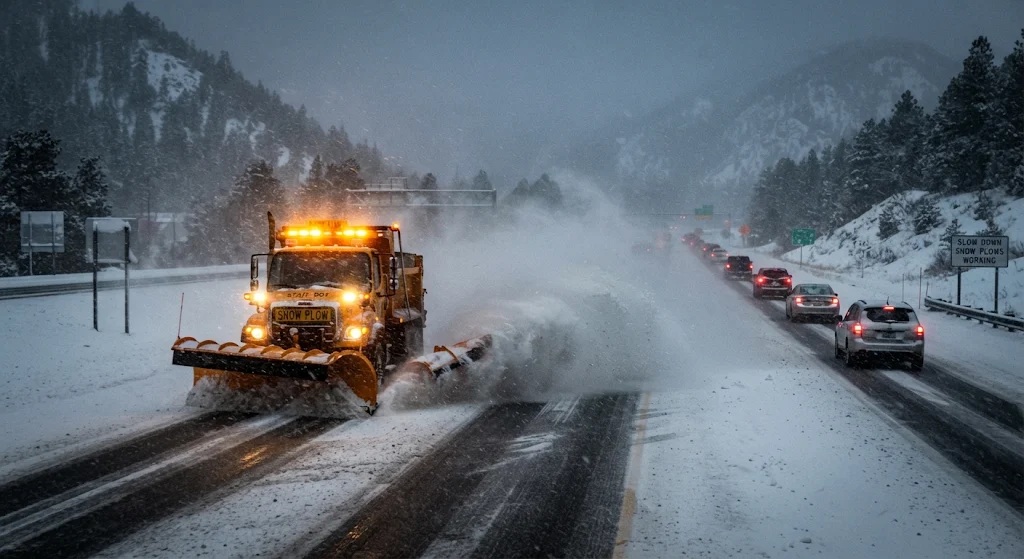
As early-season snowstorms begin sweeping across mountain passes and northern corridors, transportation officials are issuing an urgent reminder to motorists: give snowplows room to work, or risk a deadly collision.
Across the country, state departments of transportation are mobilizing fleets of heavy-duty plows to keep highways passable. Yet every winter, hundreds of preventable crashes occur when impatient drivers tailgate, weave around, or attempt to pass active snow-removal trucks. According to federal workplace and highway safety data, rear-end collisions spike sharply during winter storms, and snowplow operators rank among the most vulnerable roadway workers on the job.
“The safest place on a winter highway is directly behind a working snowplow,” transportation safety officials routinely emphasize. “The pavement ahead of the blade hasn’t been cleared or treated yet. Trying to rush past a plow puts you straight onto the worst road conditions while blinding you in its snow cloud.“
The Hidden Hazards of Crowding a Plow
Snowplows are massive, slow-moving machines that typically operate at speeds between 25 and 35 mph—well below posted highway limits. Because of their size and specialized equipment, they pose unique hazards that many passenger vehicle drivers underestimate:
-
Massive Blind Spots: Operators sit high above the road with limited visibility directly behind and alongside their rigs. Safety experts note that if a driver cannot see the plow’s side mirrors, the plow operator cannot see the car.
-
Wing Blades: Many modern highway plows are equipped with “wing plows”—heavy steel blades that extend up to eight feet off the right side of the truck to clear shoulders and adjacent lanes simultaneously. Swirling snow frequently conceals these extensions, turning an attempted pass on the right into a catastrophic collision.
-
Sudden Shifts and Whiteouts: Hitting a dense snowdrift or packed ice can jolt a multi-ton plow sideways without warning. At the same time, the wake of displaced snow creates instant zero-visibility whiteouts for anyone following too closely.
Rules of the Winter Road
To keep both motorists and road crews safe this season, highway patrols and public works agencies are urging drivers to follow four core rules whenever amber flashing lights appear ahead:
-
Stay Back: Maintain a following distance of at least 8 to 10 seconds—roughly 200 feet or more—behind an active plow. This keeps your vehicle out of blind spots and protects your windshield from flying salt, sand, and de-icing spray.
-
Never Pass on the Right: Always assume a plow has an extended wing blade. If passing is legal and visibility is completely clear, pass only on the left.
-
Respect Echelon Formations: On multi-lane highways, plows often travel in staggered “echelon” lines to clear the entire road width in a single pass. Never attempt to weave between them; in several states, passing tandem plows is strictly illegal.
-
Yield to Oncoming Plows: On two-lane roads, slow down and move as far to the right edge as safely possible when meeting an oncoming plow, as front blades frequently overhang the centerline.
With more winter storms on the horizon, officials stress that reaching a destination safely comes down to patience. Slowing down, turning off cruise control on slick pavement, and letting road crews clear the path ahead ensures everyone makes it home.