
Ending abusive government overreach. Protecting farmers, families, private property, and small businesses.
________________________________________
(Washington, D.C., July 2, 2026) – Today, U.S. Secretary of Agriculture Brooke L. Rollins announced a new Memorandum of Understanding (MOU) with the Small Business Administration (SBA) to combat weaponized regulatory and enforcement actions against America’s producers, ranchers, and small businesses. This partnership advances Pillar 4 of the Farmer and Rancher Freedom Framework by building a government-wide shield against lawfare.
Secretary Rollins was joined by SBA Administrator Kelly Loeffler, Special Envoy for American Landowners John Rich, Director of the Bureau of Land Management Stevan Pearce, Representative Harriet Hageman, Representative Eli Crane, and affected producers and ranchers, along with representatives from leading legal organizations including the America First Policy Institute, Institute for Justice, Texas Public Policy Foundation, Pacific Legal Foundation, American Stewards of Liberty, and Mountain States Legal Foundation.
For too long, a network of government agencies, radical environmentalist NGOs, and activist groups have targeted American farmers and ranchers. Producers have been forced to pay hundreds of thousands of dollars in fines, give up prime grazing land, and even sell and stop farming on generational properties. The radical environmentalism agenda has done its share of damage to America’s farmers, and Secretary Rollins is leading the fight to end environmental lawfare.
“Producers and ranchers who feed this nation should never face the full power of government alone,” said Secretary Rollins. “This partnership with the SBA creates clear pathways for redress, ensures fairness in enforcement, and demonstrates that Washington stands with, not against, the hardworking Americans who sustain our country. Through the USDA Lawfare Portal and interagency collaboration, we are delivering real protection under the Farmer and Rancher Freedom Framework.”
“Farmers and ranchers do some of the hardest and most essential work in America, yet they have faced a growing burden from costly federal regulations – crushing generational businesses that lack the time, money, or legal resources to fight back,” said Administrator Loeffler.“With our MOU, the SBA and USDA now offer America’s producers a direct line to report lawfare, with a new infrastructure to deliver lasting regulatory reform. Thanks to President Trump’s leadership, we are eliminating barriers and supporting small businesses in their mission to keep America fed, clothed, and fueled.”
“For too many ranching families, lawfare has become just another cost of doing business—except it’s one no hardworking producer should ever have to bear,” said Special Envoy for American Landowners John Rich. “I’ve traveled across this country and met families who have spent years fighting bureaucrats instead of tending their cattle, working their land, or passing their operations on to the next generation. This partnership sends a clear message: the federal government is done standing on the sidelines while producers are buried in red tape and abusive enforcement. We’re standing up for the people who feed America.”
“Farmers and ranchers are the foundation of a strong and thriving nation. Despite their tremendous contributions to our way of life, the federal government has too often stood by as radical environmentalists targeted these hardworking citizens. Thanks to the leadership of President Trump, Secretary Rollins, and Administrator Loeffler, those days of bureaucratic neglect are over. This Memorandum of Understanding will help shield America’s producers from senseless red tape and litigation. We look forward to continuing this vital partnership and laying the groundwork for a healthy, robust industry for generations to come.” Said Representative Crane (AZ-02).
The MOU formalizes collaboration between USDA and SBA’s Office of the National Ombudsman. It enables the resolution of complaints involving other federal regulatory agencies submitted through the USDA Lawfare Portal – in addition to analyzing resulting data to identify patterns for potential deregulation and accountability.
This initiative strengthens the Administration’s commitment to fairness and ensures that no farmer, rancher, or small-business owner stands alone against abusive or disproportionate enforcement practices.
Key Elements of the USDA–SBA Lawfare Partnership:
• Joint Complaint Resolution: Unified workflow to route, investigate, and resolve lawfare matters dealing with other federal agencies submitted through the USDA Lawfare Portal.
• Pattern Analysis & Reform: Shared data analysis to identify systemic issues and pursue policy fixes across agencies.
• Government-Wide Shield: Coordination with partners including DOI, EPA, DOJ, and other federal agencies to defend producers and small businesses.
• Transparency & Accountability: Clear pathways for redress that prioritize rural communities and American agriculture.
USDA Lawfare Wins to Date (Building on the Farmer and Rancher Freedom Framework):
• Saved the 175-year-old Henry family farm in New Jersey from being seized for an affordable housing project, preserving critical farmland.
• Ended a politically motivated prosecution against the Maude family stemming from a simple civil dispute over 25 acres of federal land.
• Protected Tennessee farmland from federal seizure after the Tennessee Valley Authority attempted to acquire the property for a power plant project.
• Challenged California’s proposed redistribution of agricultural land.
• Published the Farmer and Rancher Freedom Framework to defend farmers and ranchers from abusive government overreach.
• In FY 2025, performed 73 deregulatory actions far outpacing the 10-for-1 ratio required by Executive Order 14192 Unleashing Prosperity Through Deregulation with cost savings of approximately $136 million, achieved through this elimination of unnecessary or outdated regulations.
• Removed harmful Biden-Era guidance and re-established a one-stop shop where the public can go to find all the rules to increase transparency and fairness.
• Finalized a rule removing race and sex based “socially disadvantaged” designations across USDA’s loan, grant, conservation, and rural development programs.
• Finalized a rule under the Risk Management Agency clarifying that final agency determinations are only binding upon the requesting party preventing the abuse and weaponization of these determinations.
• Ended a Biden Administration attempt to assert a Forest Service easement over private land in Tennessee when Forest Service had no legal title.
• Permanently protected another South Dakota family from retribution over a fence line dispute with the Forest Service.
• Challenged radical ESG demands being put upon our American dairy farmers by foreign owned milk processors.
• Ended USDA taxpayer funding being used for solar panels on productive farmland and manufactured by foreign adversaries.
• President Trump appointed John Rich to serve as Special Envoy for American Landowners at the U.S. Department of Agriculture. As Special Envoy, Rich will serve as a leading advocate for America’s farmers, ranchers, and private landowners, helping ensure their concerns are heard and their rights are protected.
Real Cases Highlighted at the Event:
Dalton and Madison Pauley (MT) – Radical environmental groups have repeatedly sued Montana family farms and ranches, arguing that their longstanding irrigation practices might harm threatened bull trout – despite federal surveys finding no trout in the affected diversion. The lawsuits, enabled by federal law that reimburses attorney fees, create a financially unsustainable cycle for producers who must fund their own defense while facing court ordered irrigation shutdowns. This agricultural lawfare threatens multigenerational operations, prompting producers to seek federal support as they fear the precedent these cases could set nationwide.
Chuck Rogers (WA) – Washington State targeted Chuck Rogers in Yelm, Washington, through overreaching enforcement actions that blatantly ignore findings from other state agencies and disregard approved permits. The manner at which Washington state appears to target producers before establishing evidence of wrongdoing raises concerns about the arbitrary application of environmental laws and potential violations of due process rights.
Becki and Dustin Ross (AZ) – Ross’s USFS allotment in Arizona has been severely affected by Biden era administrative delays and land management issues – from unjustified archaeological clearances blocking stock tank cleaning for years to long neglected fence repairs after wildfires and burns. Despite restored AUMs, the operational strain has prevented their family from rebuilding herd capacity. USDA’s recent actions on grazing is expected to directly resolve these issues by removing unnecessary barriers, accelerating maintenance, and restoring workable access to her allotment.
Chris and Cassandra Heaton (UT) – In 2023, the Biden Administration designated a nearly 1-million-acre national monument on BLM and USFS land in northern Arizona, that conflicts with traditional ranching and grazing activities. Heaton, a generational rancher within the new monument, is concerned about facing criminal penalties if routine ranching disturbs any of the protected “objects” and requests that USDA push for the monument’s dissolution or reduction and reform of the Antiquities Act to prevent such large unilateral designations.
Casey and Meggan Murph (AZ) – A longtime cattle ranching family in Holbrook, Arizona would be financially devastated if Arizona replaces his state leased grazing lands with a large solar development project being proposed by a Danish company. This situation reflects a broader statewide trend of replacing traditional grazing uses with short term revenue projects like solar on state trust lands raising questions about long term land health and the mission of Arizona’s State Trust Lands.
Alexandra Fasulo (NY) – Solar development in New York is accelerating the loss of some of the state’s most productive prime farmland, posing significant long term risks to its agricultural communities and food security. New York’s Office of Renewable Energy Siting is overriding local control and fast-tracking industrial solar and wind projects without adequate evaluation of long-term effects on agriculture, the environment, and rural economies. This includes threats to the long term health and stability of local bald eagle populations.
For more information and to report instances of lawfare, visit www.usda.gov/lawfare.
USDA is committed to protecting America’s agricultural heritage, defending private property rights, and ensuring that producers can focus on feeding the world without fear of weaponized government.
###
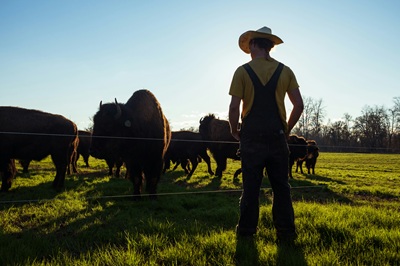
Photo by Steven Weeks on Unsplash