
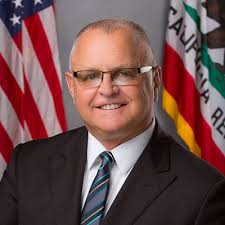
– Legislative Republicans led by Assemblyman Tom Lackey (R-Palmdale) have requested an audit of the California Department of Motor Vehicles (DMV) after reports revealed that drivers convicted of vehicular manslaughter were allowed to keep their licenses due to reporting failures.
“When someone takes a life behind the wheel, our bureaucracy should respond,” said Assemblyman Lackey, a former CHP Sergeant. “Families who have already suffered a horrific loss should never have to worry if the state failed to take action.”
An investigation revealed hundreds of serious convictions never reached the DMV, leaving dangerous drivers free to stay behind the wheel. Lawmakers say the system failed grieving families and are demanding answers and immediate fixes to ensure this never happens again.
Below is a copy of their letter.
February 11, 2026
The Honorable John Harabedian
Chair, Joint Legislative Audit Committee
1020 N Street, Room 107
Sacramento, CA 95814
Re: Request for Audit on DMV Database Violation Records
Dear Chairman Harabedian:
We, the undersigned members, are writing to request an audit of the Department of Motor Vehicle’s (DMV) database violation records to address errors that have allowed drivers convicted of vehicular manslaughter or other fatal-crash offenses to maintain their driving privileges.
Under current law, California courts are required to forward abstract convictions of traffic-related offenses to the DMV within 5 days of sentencing or upon the court order. This law ensures the DMV has the most up-to-date information on drivers’ records for purposes such as points, license suspension, and traffic offender status.
However, according to the CalMatters five-part series, “License to Kill,” California courts have failed to report hundreds of vehicular manslaughter convictions to the DMV over the past 5 years, allowing dangerous drivers to maintain their driver’s licenses. They identified roughly 400 cases from 2019 – 2024, where driver convictions were not listed on their records due to the reporting failures of the courts.
Across several California counties, required court records were not reliably submitted to the DMV and in some jurisdictions, the relied upon automated reporting tools experienced technical issues that prevented systems from operating as designed. The failed coordination efforts between the judicial system and the DMV have left California drivers vulnerable. These gaps must be addressed to improve operational efficiency, and most importantly, to prevent more families undergoing the unimaginable pain of losing a loved one.
Within five years, 20,000 lives were lost on our roadways. When lives are at stake, failures in reporting must be identified and corrected without delay. This lack of oversight and interagency enforcement is unacceptable. Rising caseloads or breakdowns in operational infrastructure signal systemic dysfunction that demands immediate action. We must protect our drivers and prevent further tragedy for Californians.
For transparency purposes, the scope of our audit request is intended to address, but not limited to, the following questions:
- What is the current volume of unprocessed abstract convictions, by offense type and by court?
- How does the current backlog compare to pre-pandemic baselines and how many drivers experienced delayed license actions or incorrect driving records due to backlog issues?
- Is the DMV currently in compliance with the regulatory timelines governing DMV processing of abstract convictions?
- What legal or due process risks arise from delayed posting of convictions (License suspensions, points, insurance impacts).
- How are abstract convictions transmitted (electronic vs. paper), and what percentage of courts still rely on manual submissions?
- Which courts generate the highest error and how often are abstract convictions returned for correction?
- What are the end-to-end steps for processing an abstract conviction, and where do the longest delays occur in the workflow?
- What is the average caseload per employee, and how are staff assigned to abstract processing?
- What systems are used for abstract conviction intake processing and are those systems interoperable with court case management systems statewide?
- What performance metrics does the DMV track for abstract processing, who is accountable for backlog reduction, and do any corrective plans exist?
Thank you for your consideration of this request. Should you have any questions or would like additional information, please contact Izzy Swindler at [email protected] or 916-319-2034.
Sincerely,
Assemblyman Tom Lackey
34th Assembly District
Assemblywoman Heather Hadwick
1st Assembly District
Assemblyman James Gallagher
3rd Assembly District
Assemblyman David Tangipa
8th Assembly District
Assemblyman Juan Alanis
22nd Assembly District
Assemblyman Stan Ellis
32nd Assembly District
Assemblyman Jeff Gonzales
36th Assembly District
Assemblyman Greg Wallis
47th Assembly District
Assemblywoman Leticia Castillo
58th Assembly District
Assemblywoman Natasha Johnson
63rd Assembly District
Assemblyman Tri Ta
70th Assembly District
Assemblywoman Kate Sanchez
71st Assembly District
Assemblywoman Diane Dixon
72nd Assembly District
Assemblywoman Laurie Davies
74th Assembly District
Assemblyman Carl DeMaio
75th Assembly District