
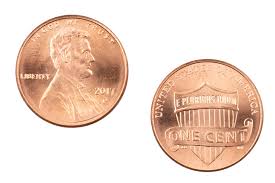
The U.S. Mint has officially ended production of the penny, a decision driven by rising costs and the coin’s diminishing role in today’s economy. The final pennies were produced at the Philadelphia Mint, where the 1-cent coin has been made since 1793, following the Coinage Act passed by Congress.
President Donald Trump authorized the discontinuation as the cost to produce each penny soared to nearly 4 cents, making the coin economically impractical. Although billions of pennies remain in circulation, they are increasingly unnecessary for everyday transactions.
Trump highlighted the inefficiency, stating, “For far too long the United States has minted pennies which literally cost us more than 2 cents. This is so wasteful!”
Despite this, many Americans hold sentimental attachments to the penny, viewing it as lucky or a collectible item. Retailers have expressed concerns about the sudden phase-out, citing a lack of government guidance on handling transactions without pennies. Some stores have resorted to rounding prices down, asking customers for exact change, or even offering incentives like free drinks for turning in pennies.
In 1793, a penny could buy simple goods like a biscuit or a candle. Today, many pennies end up forgotten in drawers or jars, serving more as keepsakes than currency.
Collectors and historians value pennies as tangible pieces of history, chronicling over 200 years of American culture. Frank Holt, a historian of coinage at the University of Houston, reflects on their significance: “We put mottos on them and self-identifiers and we decide — in the case of the United States — which dead persons are most important to us and should be commemorated. They reflect our politics, our religion, our art, our sense of ourselves, our ideals, our aspirations.”