
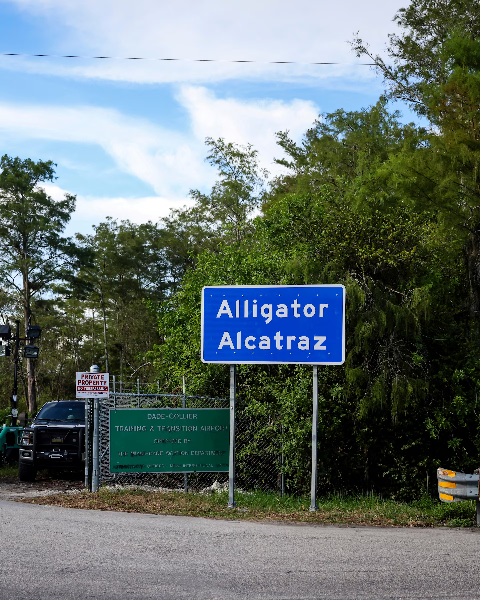
Federal officials have confirmed that Florida has been approved for a $608 million reimbursement for the costs associated with building and operating an immigration detention center located in the Florida Everglades, commonly referred to as “Alligator Alcatraz.” This development raises the possibility that the facility could face closure for a second time.
The U.S. Department of Homeland Security announced the full approval of the reimbursement this week. However, the funds have not yet been disbursed, as the Federal Emergency Management Agency (FEMA) must first review the expenses for which the reimbursement is requested. Stephanie Hartman, communications director for the Florida Division of Emergency Management, clarified this process in an email to The Associated Press.
This reimbursement approval could trigger the enforcement of a federal judge’s injunction issued in August. The injunction, granted after environmental groups sued, cited the lack of a proper environmental review before the site was converted into an immigration detention center. The Miami judge ordered Florida to wind down operations at the facility within two months.
An appellate court panel in Atlanta temporarily stayed the injunction, allowing the detention center to remain open. The panel reasoned that the state did not yet require a federally mandated environmental impact study because federal funds had not been received. However, the panel noted that if federal authorities approve and release the reimbursement, an environmental impact statement (EIS) may then be required.
The detention center had drawn national attention when President Donald Trump toured the site in July, describing it as a potential model for future immigration detention facilities as part of his administration’s efforts to expand deportation infrastructure.
Environmental organizations continue to challenge the project, asserting that the reimbursement confirmation proves the facility is a federal project subject to federal environmental laws. Elise Bennett, Florida and Caribbean director at the Center for Biological Diversity, stated, “This is a federal project being built with federal funds that’s required by federal law to go through a complete environmental review. We’ll do everything we can to stop this lawless, destructive and wasteful debacle.”