
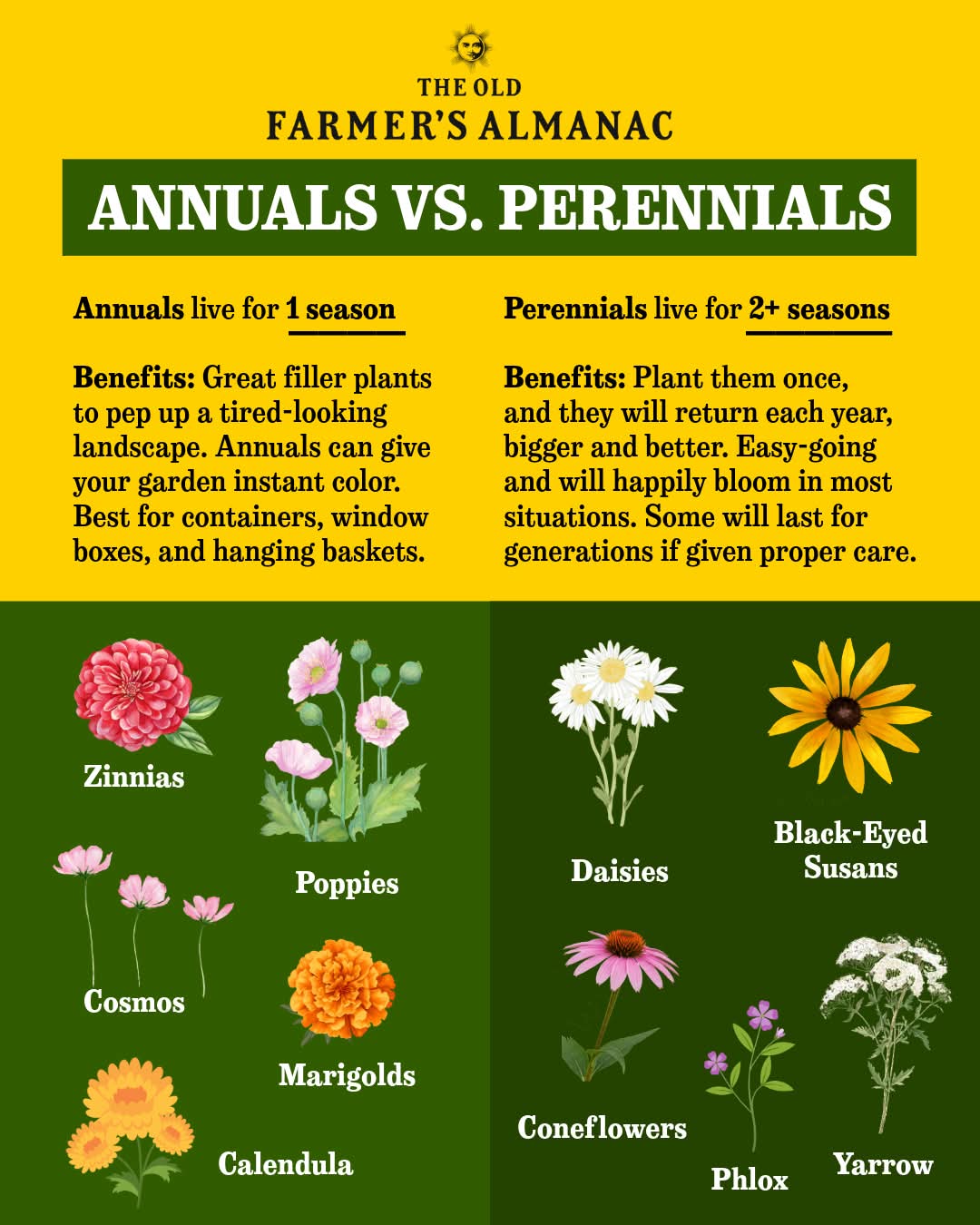
What’s the difference? 🤔🌿It can be confusing to determine whether a plant is an annual, a perennial, or a biennial. The answer mainly depends on the plant’s life cycle, and whether it dies at the end of the season or not. However, other factors, such as climate, can also play a role.
🌿Annual Plants are a type of plant that live for just one season. In that brief period, they germinate, grow, flower, and set seeds for next year’s plants—mission accomplished! Unless they self-seed, they will need to be replanted every year. Think: most vegetables like carrots, broccoli, and tomatoes. Also think cut flowers!
🌿Perennial Plants are the mainstay of many gardens. Plant them once, and they will return each year, bigger and better, until you finally accept that they need to be reined in. Not all perennials have the same lifespan. Some, such as lupine, columbine, delphiniums, and heuchera, are short-lived, lasting only 3 to 5 years.
🌿Biennials are plants that take two years to complete their life cycle. The money plant (Lunaria) is a great example. In the first year, it’s a rough-looking, ground-hugging plant. In the early spring of its second year, it sends up a tall flower stalk with lovely purple blossoms. Money plant flowers give way to flat circular seed pods that we let dry on the plant until late summer. The outer coverings can be pulled off, revealing the shiny silver inner membrane that holds the seeds. Gather the seeds to scatter where you want new plants, or let them drop from the old plant naturally. Next spring, the 2-year process will start all over again.
Our advice? Don’t think of it as annuals vs. perennials! Grow a mix of annuals, perennials, and biennials to keep your garden blooming from early spring until frost. Making good use of the vast diversity the plant world offers is the key to having an interesting and colorful garden! Find more tips at Almanac.com/annual-vs-perennial