
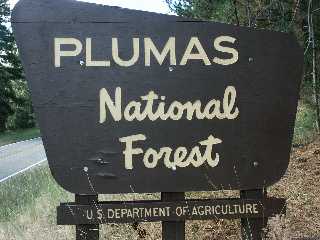
The Plumas National Forest reports it entered Stage I fire restrictions July 10, based on increased fire danger rating and fire behavior indices combined with drying fuels. Despite an average snowpack, early-season high temperatures melted snow faster than expected, said PNF. Periods of higher-than-average temperatures are forecasted to continue in the area, further drying fuels and increasing fire danger.
Under Stage I fire restrictions, campfires are only allowed in specific designated recreation sites in established campfire rings. Sites are listed in Exhibit A of the closure order. Smoking is only allowed within an enclosed vehicle or building, in one of the designated recreation sites listed in Exhibit A or in an area at least 3 feet in diameter that is completely clear of all flammable material.

Additionally, internal combustion engines, such as those in vehicles and generators, may only be used on designated roads and trails. Boat engines are exempt. Chainsaw use for firewood cutting is still permitted, but woodcutters need to ensure that they are checking the woodcutting status each day prior to cutting by calling 1-800-847-7766.
Welding or operating an acetylene or other torch with an open flame is prohibited.
Possession of a valid California campfire permit is not an exemption from the prohibitions. However, California campfire permit holders can use portable campfire pits, stoves or lanterns that use gas, kerosene, jellied petroleum or pressurized liquid fuel as long as they have a working shutoff valve and are used in an area that is at least 3 feet from any flammable materials. California campfire permits are free and available at Forest Service and California Department of Forestry and Fire Protection offices or online at https://permit.preventwildfiresca.org/.
“Conditions on the forest are meeting the indices to start fire restrictions for the season,” said Plumas National Forest Fire Management Officer Martin Senter. “As we enter the time of year where we are at higher risk for wildfire, we need the public’s help to prevent human-caused wildfires.”
Forest employees and partners are working on critical fuel reduction for community protection and post-fire recovery work.
“Approximately two-thirds of the Plumas National Forest has been affected by wildfire over the past several years,” Senter said. “We have been fortunate over the past three years, in large part due to local residents helping preventing wildfires, and we need that support to continue as we work on fuel reduction and community protection.”
In recently burned areas, there is concern about increasing potential for wildfire, said PNF. Dense brush, standing dead trees and heavy fuels from downed trees will not only burn at high severity, but provide more dangerous conditions for firefighters. While firefighters worked on full suppression of the recent Letter Fire that was started by lightning, firefighter safety was the highest priority, requiring additional safety measures and time, said PNF. Fallers were needed to cut standing dead trees for firefighters to safely build fireline and mop up.
“In addition to being very careful in the unburned areas of the Plumas National Forest, we ask that anyone choosing to recreate in an area that has burned in the past 10 years not only watch for hazards, but also be careful with anything that can spark a wildfire,” Senter said. “These areas are now at high risk for reburning and firefighting is more hazardous and requires different strategies for firefighter and public safety.”
Suspected wildfires can be reported by calling 911.
The fire restriction order is formally referenced as Closure Order Number 05-11-25-02. Violations of the Stage I prohibitions are punishable by a fine of not more than $5,000 for an individual or $10,000 for an organization, or imprisonment for not more than six months, or both.
More information on the Plumas National Forest is available at http://www.fs.usda.gov/plumas or http://www.facebook.com/USFSPlumas.