
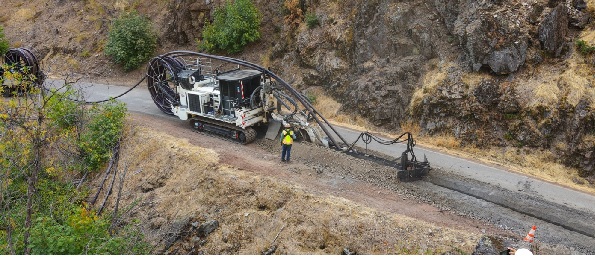
Pacific Gas and Electric Company (PG&E) has submitted a major long-term proposal to bury an estimated 167 miles of electric distribution lines across Nevada, Sierra, and Plumas counties between 2028 and 2037. The initiative is part of a broader ten-year plan designed to mitigate wildfire risks and improve power reliability throughout high-threat regions in Northern and Central California.
The proposal builds upon undergrounding projects already underway or scheduled for completion through 2027 across the three Sierra Nevada mountain counties. If approved, the long-term work would substantially expand the utility’s underground footprint in rural, heavily forested communities that face extreme wildfire threats during dry, windy seasons.
Targeted Infrastructure and Regional Breakdown
Under the ten-year strategy, PG&E aims to focus its undergrounding investments on corridors where moving overhead lines below ground delivers the highest safety return:
-
Plumas County: Targeted for the majority of the regional allocation, reflecting its vast forested terrain and recent history of catastrophic wildfire impacts.
-
Nevada County: Scheduled for strategic line burials near foothill communities and key emergency access routes.
-
Sierra County: Focuses on high-risk rural distribution circuits connecting remote mountain townships.
Placing power lines underground eliminates roughly 98% of wildfire ignition risk associated with electrical distribution infrastructure on those lines. It also drastically reduces weather-related power outages during severe winter storms and summer fire-weather events.
Regulatory Review Process
The multi-year proposal is currently awaiting formal evaluation by state energy regulators.
-
Safety Evaluation: The California Office of Energy Infrastructure Safety (Energy Safety) will review the proposal to determine whether the proposed line miles substantially reduce wildfire risks and enhance overall grid reliability.
-
Cost and Rate Review: If Energy Safety approves the technical and safety scope, the plan will advance to the California Public Utilities Commission (CPUC). The CPUC will evaluate PG&E’s cost requests, potential rate impacts for consumers, and project implementation schedules before granting conditional cost recovery authorization.
PG&E officials note that a structured 10-year planning horizon allows the utility to coordinate more efficiently with local county public works departments, secure equipment suppliers in advance, and lower overall installation costs per mile.