
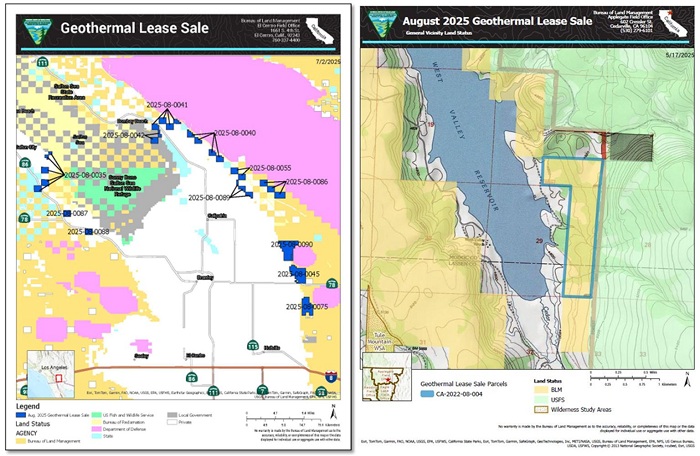
The Bureau of Land Management is preparing to offer 13 parcels of public land in Imperial, Lassen, and Modoc counties for geothermal energy development. In Modoc County, the parcel is located near West Valley Reservoir, a well-known area for fishing, camping, and public access. The online auction will be held Tuesday, Aug. 26, beginning at 7 a.m. Pacific Time on EnergyNet. Each parcel will have a one-hour bidding window listed on the auction site. In total, about 23,000 acres are up for lease, with proceeds split between the federal government, the State of California, and the counties where the land is located.
This lease sale is part of a larger federal effort to increase clean energy production on public lands. Just this month, the BLM approved a major geothermal project in Utah that could eventually generate up to 2 gigawatts of electricity. That project uses enhanced geothermal systems, a newer technology that draws heat from beneath the earth even in areas without natural steam. These developments show how geothermal energy is becoming a more important part of the country’s clean energy plan.
The BLM also announced a proposal to simplify how companies test land for geothermal energy. Right now, companies often have to go through two different environmental reviews before they can even start confirming if underground heat exists. The new rule would allow small exploration projects to move forward faster, as long as they don’t harm the environment. If the rule is approved, developers could test up to 20 acres without doing a full environmental study, unless the area includes sensitive plants or wildlife. This change could cut down delays and save money for companies hoping to invest in local geothermal energy.
The move comes after a very successful lease sale in Nevada earlier this year. The BLM raised more than $7 million from geothermal leases there, far more than in previous years. That success is a sign that investor interest in geothermal is growing quickly.
For communities in Modoc, Lassen, and Imperial counties, this matters because geothermal development can bring in revenue, jobs, and long-term investment. Counties get 25 percent of the money from lease sales and future royalties if energy is produced. That income can help fund things like roads, emergency services, or rural development projects. Geothermal projects also need workers to help with exploration, drilling, and possibly future power plant construction.
While development takes time, this lease sale is the first step in turning underground heat into electricity. Unlike solar or wind, geothermal energy can run around the clock, making it a reliable source of power. With state and federal support growing, counties in northeast and southern California could soon play a bigger role in supplying clean energy to the grid.
Still, there are some downsides local communities should consider. Geothermal development can impact the environment, especially during drilling. Even early testing can involve clearing land, building roads, and using heavy equipment. This can affect wildlife, plants, or nearby water sources. The BLM reviews these impacts, but the process doesn’t always catch every concern, especially in remote areas.
There is also the risk that some counties may not see a return for years. If a developer doesn’t find a usable resource or backs out, the land may sit idle until the lease expires. In the meantime, counties may still need to deal with traffic, dust, or other temporary impacts from early activity.
Another issue is that counties and residents have limited control once land is leased. While the BLM allows for public input, most decisions are made at the federal level. Rural residents may find it difficult to participate in public comment periods, especially if they are short or held online.
Some geothermal sites may also be close to tribal cultural areas. In those cases, drilling could disturb land with historical or spiritual value. The BLM is required to consult with tribes, but the process doesn’t always meet community expectations.
Despite the challenges, many experts believe geothermal is one of the best tools for reaching clean energy goals. The key for rural communities will be staying involved, asking questions early, and making sure the benefits outweigh the risks.
To learn more about the parcels and bidding process, visit EnergyNet.com or contact the BLM California State Office at 916-978-4400.