
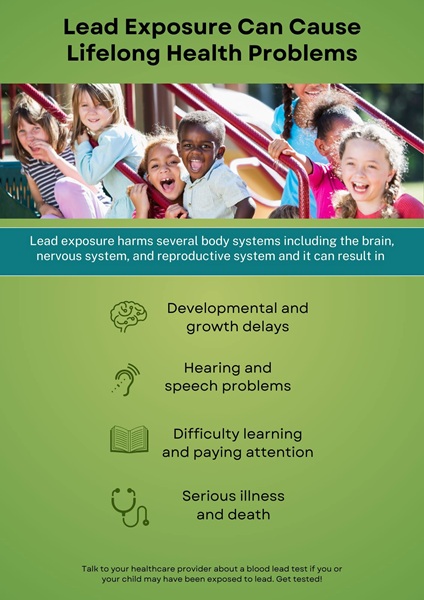
Public health officials are urging parents and caregivers to take proactive steps to safeguard children from lead poisoning, a preventable environmental hazard that can cause severe, long-term health and developmental issues in young children.
Lead exposure poses a significant risk to developing brains and bodies. Even low levels of lead in a child’s blood can lead to learning disabilities, behavioral challenges, lower IQ, and slowed growth. Because young children frequently put their hands and objects in their mouths, they are particularly vulnerable to ingesting toxic lead dust and paint chips found in older homes.
Health experts recommend the following simple, daily habits to drastically reduce your family’s risk of lead exposure:
-
Keep Surfaces Clean: Frequently mop floors and wipe down windowsills, door frames, and other surfaces with a damp cloth to remove lead-contaminated dust.
-
Wash Hands and Toys Often: Regularly wash children’s hands—especially before eating and after playing outside—and keep toys free of household dust.
-
Inspect Older Homes: Prevent children from playing near chipping, peeling, or cracking paint, particularly in residences built before 1978.
-
Serve a Balanced Diet: Nutrition plays a key role in protection. Foods rich in calcium (like milk and yogurt), iron (lean meats and beans), and vitamin C (citrus fruits and bell peppers) help block the body from absorbing lead.
Because lead poisoning often shows no clear symptoms early on, testing is the only definitive way to know if a child has been exposed.
Get Tested: If you have questions about lead exposure or would like to schedule lead testing for your child, please contact the local clinic