
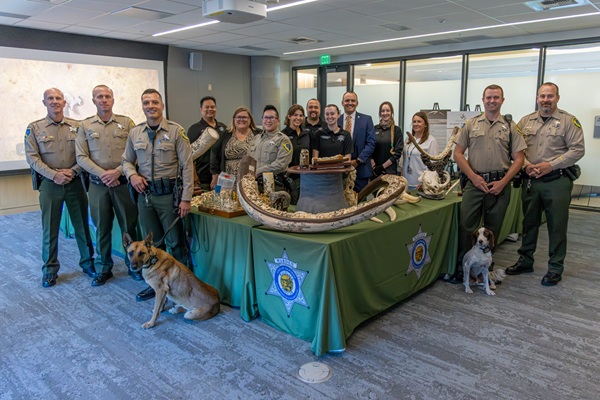
This week CDFW brought hundreds of pieces of trafficked animal parts seized as part of criminal investigations to the California capitol to show Assembly Bill 96 at work. Trafficked wildlife parts on display included carved elephant and mammoth tusks, a narwhal tusk, elephant snouts, animal furs and more. On hand to educate lawmakers and the public were CDFW forensic specialists, wildlife trafficking investigators, wildlife officers and K9s specially trained to assist in enforcement of laws that protect wildlife.
It’s been 10 years since AB 96 was passed by the California legislature. AB 96 created California Fish and Game Code Section 2022 that tasks CDFW with stopping the trafficking of all elephant ivory, rhino horn and other mammal teeth (Ivory) in the state. This mission has since grown to create a strong team combating all forms of illegal wildlife trade.
AB 96 is named for the 96 elephants killed by poachers every day in Africa. CDFW’s work to enforce laws protecting not just tusks but trafficked wildlife species and wildlife parts can have a huge impact, a global impact, in a state that sees massive numbers of cargo by land, sea and air.
Since 2016, CDFW has dismantled extensive criminal networks trafficking ivory, seized some 5,000 lbs of ivory and its Wildlife Forensics Lab has analyzed nearly 3,000 pieces to support investigations and prosecutions. CDFW will continue to support the world’s exploited wildlife, giving a voice to those who don’t have one.