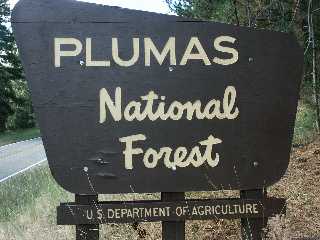
Following successful prescribed burning operations in the area last spring, firefighters on the Plumas National Forest Feather River Ranger District are returning to Magalia early next week to continue critical fuel reduction work by burning large machine piles on approximately 84 acres, conditions permitting.
Ignitions are expected to start Monday and continue through Tuesday, starting with approximately 17 acres of machine piles in the Hollywood Unit located off the Skyway and Hollywood Drive. The piles are located on National Forest System lands behind the residences.
If conditions remain favorable, ignitions will continue on approximately 67 acres of large machine piles in the area located north of Magalia along the Skyway between Hupp Coutolenc Road and Casierra Drive. The unit is north of Paradise Lake on the Plumas National Forest between the communities of Magalia and Lovelock.
Pile burning will be on both sides of approximately 1 mile of Skyway, as well as two sections of Hupp Coutolenc Road south of Skyway.
These operations are part of ongoing fuel reduction in areas affected or threatened by the 2018 Camp Fire and to help with community protection for Magalia, Paradise and the surrounding area. It is part of an essential fuel break for community protection from wildfire and to help ensure safe and secure evacuation routes.
The Butte County Fire Safe Council coordinated fuel reduction and construction of the machine piles over the summer. The piles are composed of beetle-killed trees and small diameter ladder fuels. Treatment and removal of these hazardous fuels is urgent ahead of the 2026 fire season.
Smoke is expected to be visible from Magalia, Paradise, Chico and the Sacramento Valley, but is not expected to have significant long-term impacts to nearby communities.
Short duration, minor smoke impacts are expected in Magalia, Sterling City, and Lake De Sabla as well as Skyway, Hupp Coutolenc Road, Casierra Drive and along neighboring forest roads. Visibility on roads in the project area may be reduced, especially early in the morning and late evening as smoke settles.
Firefighters will make efforts to reduce smoke impacts to nearby communities. During the evening, smoke may settle into lower areas, including Magalia. Area residents and visitors sensitive to smoke may want to be prepared for potential smoke impacts and take measures to reduce exposure.
There will be increased firefighting equipment traffic in the area and firefighters working along or near roads. It is recommended to use caution in the area on Skyway, Hupp Coutolenc Road and Casierra Drive during the pile burning operation.
Temporary traffic controls will be in place as needed. Drivers are asked to slow down, be aware of their surroundings, watch for fire equipment exiting and entering roadways, firefighters working alongside roads and possible slow traffic in the area through next week.
Even though it is in the forest, the planned pile burning next week in Magalia is along a major traffic corridor and is in the wildland-urban interface near homes and neighborhoods.
If weather conditions become unfavorable, including increased or gusty winds in the area, burning will stop until conditions improve. Firefighters will be monitoring conditions throughout the operation.
For more information on the Plumas National Forest, visit www.fs.usda.gov/plumas or on Facebook at www.facebook.com/USFSPlumas.
About the Forest Service: The USDA Forest Service has for more than 100 years brought people and communities together to answer the call of conservation. Grounded in worldclass science and technology and rooted in communities, the Forest Service connects people to nature and to each other. The Forest Service cares for shared natural resources in ways that promote lasting economic, ecological and social vitality. The agency manages 193 million acres of public land, provides assistance to state and private landowners, maintains the largest wildland fire and forestry research organizations in the world. The Forest Service also has either a direct or indirect role in stewardship of about 900 million forested acres within the U.S., of which over 130 million acres are urban forests where most Americans live.