
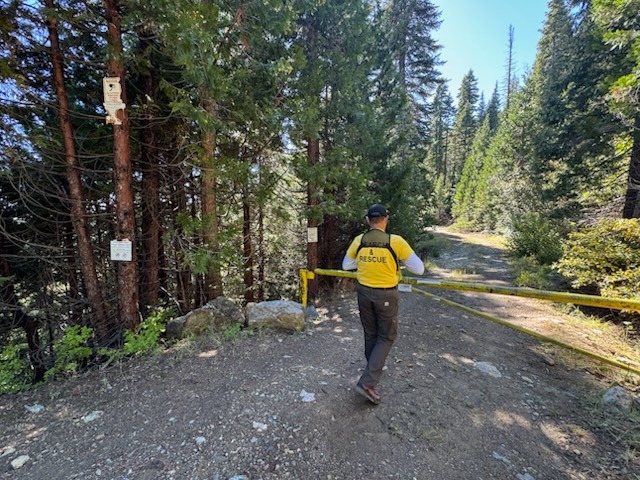
Over the weekend, the Siskiyou County Sheriff’s Office Search and Rescue (SAR) team conducted a search for an overdue hunter near Big Meadow in the Quartz Valley area.
The hunter, a local man, was dropped off above Big Meadow by a friend with the intent to rendezvous at a lower point approximately 45 minutes later. When the hunter failed to return 3 hours after the predetermined time, his friend called 9-1-1. Concerningly, as the hike was only supposed to last 45 minutes, the missing man was not prepared for overnight stay in the woods, and had left his jacket and other essential items in the friend’s vehicle.
The SAR team thoroughly searched the point last seen, and could not locate any sign of the hunter on the planned route down to the meeting point. Fortunately, later in the afternoon Sunday, the SAR team was informed that the man had made it back home after spending Saturday night near the Shackleford drainage. According to the hunter, he had gotten lost while attempting to find the rendezvous point, but knew the general direction home. Thus, he changed course, and took the longer route back to his house.
Fortunately, this search ended on a positive note with a self-rescue, but does contain a few important lessons for everyone exploring the Great Outdoors of Siskiyou this time of year:
1. Fall brings shorter days, colder nights, and inclement weather. Plan for the worst and hope for the best by always bringing some extra layers – including a waterproof jacket, a light source such as a headlamp or flashlight, an emergency blanket, water, snacks, and important medications, (such as insulin). These extra steps can be a lifesaver if you become lost or injured during your next hunting or hiking trip, even if you only plan to be out for a short time.
2. Have a physical map or GPS route downloaded of the area you are traveling in as a failsafe in the event you become disoriented. This is important to do even in areas you have visited often.
3. Establish a means of communication, either via a phone, walkie talkies, whistle, or satellite device.
4. When lost, stay calm and stay put. The moment you realize you’re lost, STOP moving. Panic and wandering can make it harder for search teams to locate a missing person and often increases the likelihood of injury, turning a bad situation into a life-or-death scenario.
5. Establish a return date and time with loved ones or travel companions, so in the event you are overdue, they know when to notify authorities. Additionally, ensure someone knows your itinerary, ideally with a map or predetermined route to give rescuers the best chance to find you.
6. Avoid traveling alone whenever possible.