
Here is the full story.
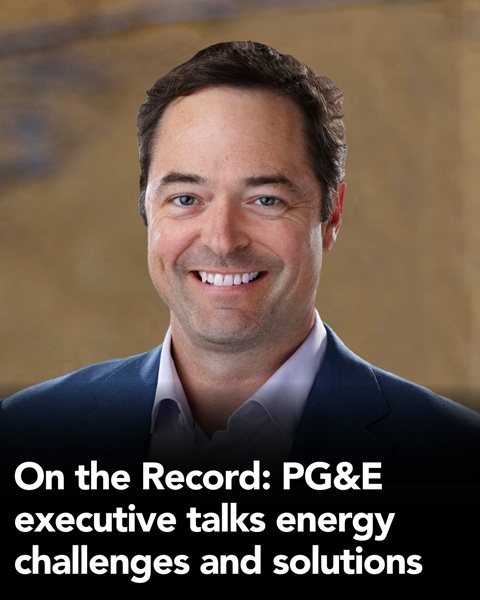
Dave Canny is vice president of the North Coast region at Pacific Gas and Electric Co. He spoke with Ag Alert® about PG&E’s efforts to mitigate wildfire risks, improve electric reliability and reduce costs. The below conversation was edited for length and clarity.
What are your responsibilities as PG&E’s vice president for the North Coast? I’m focused on delivering our business safely at a local and regional level. We leverage what we refer to as our performance playbook to ensure that our leaders and our teams locally and within the region are coordinated and are showing up in the right way for customers and other stakeholders.
How does your regional service model improve service, and where is there room for improvement? Our regional service model uses our performance playbook to improve service at a local level. There are three components. We have a safety excellence management system. Then, we have our Lean operating system that includes a daily operating review with regional leaders reviewing key performance indicators across our gas and electric functional areas—looking at customer transaction scores associated with planned and unplanned electric service outages, new business connections and field visits. Based on how we’re performing, we can make real-time adjustments on a daily basis. The regional service model has helped us address issues as they come up much more quickly and effectively for customers. The next step is to be more proactive with customers so we can plan together for future energy needs.
Is that one of the areas you’re looking to improve? In the North Coast region in particular, electric reliability is a challenge for some customers. We’re very focused in the region on improving that. At a systemwide level, we’ve established what we call a reliability command center where teams come together to plan for better reliability. We meet daily to review electric outages from the previous day—to understand what might have caused the outage, how we responded and how to prevent recurrence.
What are the boundaries of the North Coast region and what are the biggest challenges there? PG&E’s North Coast region stretches from the Golden Gate Bridge to Humboldt County and then east through Lake and Solano counties. The threat of wildfire is a challenge in the region. We have made significant progress on reducing risks associated with our equipment and are partnering with others to further reduce wildfire risk, which in some areas can affect electric reliability.
How does your leadership help shape PG&E’s strategy for delivering safe and reliable energy across your region? I’m fortunate to work with a number of excellent leaders in the North Coast. Having good partners internally and externally is hugely important. Then, the approach I like to take is servant leadership. How can I make sure our teams have what they need to be successful in delivering for customers? And then ensuring that I’m really connected with customers and stakeholders, listening to their needs and being responsive to them.
PG&E has made significant investments in wildfire mitigation. What are the most impactful changes your team has implemented this year? We’re grounded in our layers of protection, as we refer to them. These are situational awareness, operational controls and long-term resiliency. In terms of situational awareness, for example, we have an extensive network of weather stations. That allows our meteorology team to make a real-time, granular forecasts for what’s needed both for wildfire mitigation and storm preparation. This enables us to make daily decisions on enabling or disabling Enhanced Powerline Safety Settings and to forecast for a Public Safety Power Shutoff (PSPS) event, and to do that in a very targeted way. One of the most significant improvements we’ve made in the past couple of years is how targeted we can be with our PSPS, shutting off power only where it’s needed for safety and keeping the rest of the grid energized.
What’s an example of the long-term resiliency you mentioned? We are on track to have undergrounded 1,000 miles of distribution power lines by later this year, including more than 200 miles in the North Coast region. That is on the way to a goal of 10,000 miles. That’s the most effective way to permanently reduce wildfire risk. In the North Coast, we are prioritizing areas in Napa and Lake counties that have a high risk of wildfire because of their weather, topography and vegetation.
How do you engage with county Farm Bureaus? The primary way we engage with county Farm Bureaus is through our team of small- and medium-business representatives located throughout the region. Those are critical relationships that we are looking to further invest in.
In May, you met with residents to discuss fire prevention and safety initiatives. What was your main takeaway from that event? Yes, this was an open house we had in Mill Valley. These events are one of the ways we ensure we’re hearing what customers’ concerns are so we can address them. It’s also about ensuring they know about the tools and resources that are available to them. My biggest takeaway was the importance of that ongoing engagement so that we can have a comprehensive understanding of what that community needs.
Vegetation management is an important issue for farmers. What is your approach to that? What steps are being taken to communicate with affected landowners? We’ve done a lot of work in the past couple of years to communicate in advance with landowners and customers about the work that needs to happen to keep them and their neighbors safe. We’re also working to minimize the number of touches we have on a customer’s property. This is important safety work that we have to do, but by streamlining our processes, we’re trying to show up fewer times at an individual property.
How do you think affordability and the push towards electrification should be balanced? With respect to electrification, this is transportation electrification, building electrification and the big one in the news: data centers to enable artificial intelligence. In California, we’re forecasting roughly doubling the electricity load on the PG&E grid by 2040. We’re optimistic that done right, with the proper planning, technology and innovation, we can spread out the grid usage over more customers and in turn actually reduce energy bills. We recognize that affordability is a huge issue for customers and are focused on stabilizing and reducing customers’ bills.
What message do you have for farmers and ranchers who rely on PG&E for their businesses? We’re honored to serve this incredibly important segment of our customer base and population. We recognize the critical role these customers play and are focused on helping reduce their cost of energy. I would love to hear from our agricultural customers about how we can serve them better. I can be reached at [email protected].