An outraged crowd gathered Sept 2 for the Plumas County Board of Supervisors meeting. Their goal: Stop construction on a 200-foot cell tower near Greenville on land that includes a Native American cemetery.
Two days later, construction stopped.
At a hearing held Sept. 4 in Plumas County Superior Court, the supervisors withdrew their request for a temporary restraining order after holding telephone conversations with attorneys for Verizon Wireless, the company building the cell tower. Company officials agreed to stop all work at the site beyond making it safe, according to a statement from the Plumas County Counsel’s office. The construction halt will remain in place while Verizon and county officials continue discussions over the next few weeks, the statement said.
“As a community, we can trust in the process. It does work most of the time,” said Board of Supervisors Chairman Kevin Goss.
The supervisors’ legal action was driven by public concerns over the cell tower construction aired at their Sept. 2 meeting. Dwayne Anthony Washoe was among those who asked the supervisors to immediately halt the construction by Verizon Wireless on Sierra Pacific Industries land. Speaking on behalf of the Washoe family and the Washoe family cemetery, he said the commercial structure would disrupt “the spiritual connection and peace” the cemetery is meant to provide.
“We ask that the sanctity of the Washoe cemetery, along with the unmarked ancestral burial grounds surrounding it, be honored and protected, and that a new, more appropriate site be selected,” Washoe wrote in a statement read aloud by Goss.
Supervisor Tom McGowan moved to stop the construction. He amended his motion three times before the board unanimously approved seeking a cease and desist order to Verizon. It includes direction to the county planning department, county counsel and Goss to communicate with all involved parties and verify answers to all questions before asking a judge to suspend the construction.
No notification
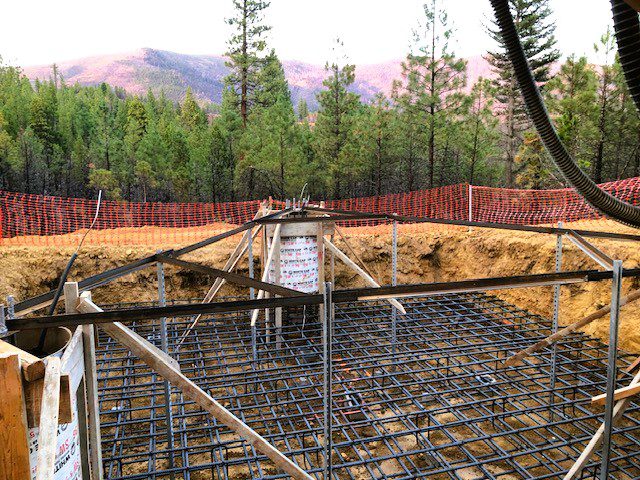
Neither Washoe nor Goss nor any of the cell tower’s neighbors near Powerline Road received notification of the construction, which started around Aug. 20. The official owner is Vertical Bridge, with Verizon the intended cell tower tenant. It is being built on a 40-acre parcel of SPI land in a timber production zone. Plumas County’s telecommunications ordinance does not require notification of projects on land zoned for timber production, said Tracey Ferguson, county planning director. That is the single exception to contacting neighbors and the public in advance of cell tower construction, she said. The county building permit, issued Aug. 5, was ministerial, and also required no public notification, she said.
Neighbors and most county officials first learned of the project when they noticed stakes in the ground, followed by the arrival of big equipment that began digging a hole for a concrete pad.
Hannah Stewart, whose father’s property is adjacent to the project, called the construction and the lack of notification “a severe injustice.” The permit, while legal, is “gross negligence,” she said. Stewart asked the supervisors to stop the project. “Do not let Verizon take advantage of a bureaucratic loophole and the citizens of this county,” she said.
Josh Hart, representing Plumas Wired, said the telecommunications ordinance causing the consternation “didn’t drop out of the sky.” He opposed it in 2019, when the ordinance was adopted.
“But the board rejected our suggestions, and the outcry from the public, and went forward with a very corporate-friendly ordinance following meetings with Verizon,” Hart said via Zoom.
It’s clear that we have a gap in our local code that needs to be corrected, said Supervisor Mimi Hall. But there are also federal regulations that guide cell tower construction. The Federal Communications Commission requires an environment assessment under the National Environmental Policy Act and consultations with tribal officials when relevant, she said.
“It doesn’t sound like anyone has been contacted,” Hall said, but added that it is important for county officials to understand all the relevant rules.
After the meeting, she and Goss spent two days to obtain the NEPA documents Vertical Bridge officials said they had processed. By midday Sept. 4 they still had not received them, Goss said.
Hall visited the cell tower site with Washoe, which raised several concerns about who actually owns what near the construction site. Washoe had a device with him that determines property lines within a few feet. When they were standing right next to the construction site they were actually on John Stewart’s property, according to the device, Hall said. And according to the maps Washoe provided, the cemetery was also on “the exact same lot.”
“I’d like to see what happened as a result of the NEPA process, and what tribal entities and family members they did reach out to. I have a feeling it was none,” Hall said.
Several speakers noted the importance of improved cell communications to a rural community recovering from the 2021 Dixie Fire, the state’s largest single wildfire. Trina Cunningham, a Maidu tribal community advocate, called the Powerline Road cell tower an example of something that met the legal requirements but not the needs of the community.
“It’s deeply troubling that, as Dixie fire survivors, we’ve had multiple projects offered under the guise of helping our community… without actually talking to the community,” Cunningham said.
Beyond cease and desist
Before voting on McGowan’s cease and desist motion, Supervisor Dwight Ceresola suggested county officials review all of the county-issued approvals of the project. Along with what was done, they should consider “what should have been done,” especially with regard to tribal issues. Ceresola also urged confirmation of all property lines.
And he reiterated Hall’s call for positive communications with Verizon and SPI. “Smiling face to face just works better,” he said.
Supervisors and the public in attendance seemed to share a sense of moral imperative expressed by Cody Clayton, of Quincy: “This is a time when, just as human beings, we are called to do the right thing. And so we’ve got to stop this. It’s a mess, a bureaucratic nightmare.”
Source: Plumas News