On Sunday, August 10, a solo male climber was injured during a descent of Mount Shasta after losing control while glissading in upper Avalanche Gulch near Redbanks, roughly 13,000 feet in elevation. This section of the route is the steepest portion, and conditions can quickly turn dangerous.
Glissading (sliding down a snow-covered slope while seated, often using an ice axe to control speed) can be an efficient way for mountaineers to descend. However, when the slope is too steep or the snow too firm, even experienced climbers can find themselves in trouble. In this case, the climber’s ice axe was ripped from his hands during the descent, leaving him unable to slow down. He tumbled several hundred vertical feet, sustaining a leg injury along with scrapes, contusions, and lacerations that left him immobile.
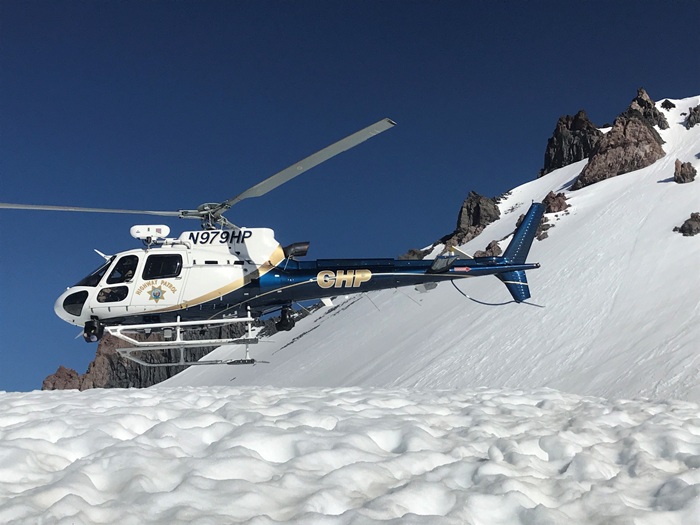
The Siskiyou County Sheriff’s Office coordinated a mutual aid response, notifying the U.S. Forest Service Mount Shasta Climbing Rangers and California Highway Patrol Air Operations. A CHP helicopter was able to insert a climbing ranger onto the mountain. After reaching the injured climber, the ranger successfully hoisted him into the helicopter, and he was flown to Mercy Medical Center in Mount Shasta City. He is expected to make a full recovery.
This incident serves as a reminder that glissading, while appealing, carries inherent risks. Safe glissading requires soft snow, a gentle slope with a clear run-out, and the use of proper technique. Crampons should always be removed before attempting it, and both the ice axe and heels of the boots should be used to control speed. Even then, caution and a slower pace are key to avoiding accidents on the mountain, “faster than walking” is fast enough.
Thanks to the rapid coordination and skill of all agencies involved, this climber will be able to return to the mountains another day.