
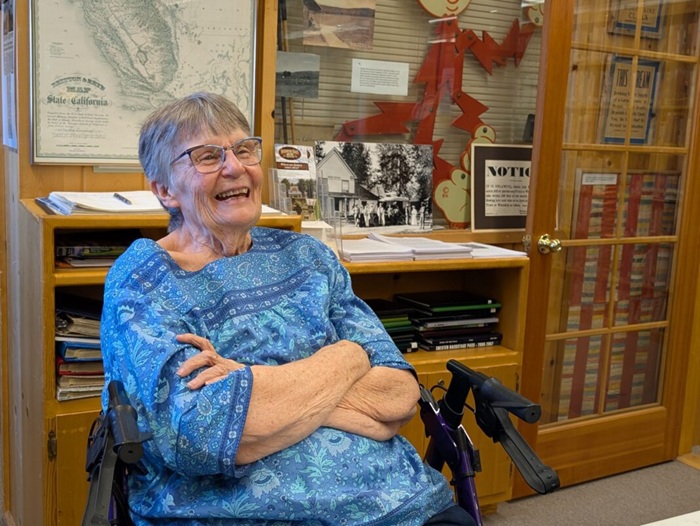
The Chester-Lake Almanor Museum recently celebrated its 50th anniversary, a milestone largely attributed to the dedication of co-founder Marilyn Quardrio. Quardrio describes the museum’s mission as preserving the history of a way of life that was submerged with the creation of Lake Almanor, aiming to document over a century of local history.
Quardrio’s passion for history began in her childhood, influenced by her grandfather’s storytelling and a teacher who sparked her interest with tales of the Great Depression. Her family’s long-standing ties to the area provided her with a rich backdrop of local narratives. After pursuing her education in history and political science, Quardrio returned to Plumas County as a teacher, dedicating 40 years to education before embarking on her museum career.
The museum’s origins trace back to the early 1970s when community fundraising efforts began after tragic drownings in Lake Almanor. Quardrio was recruited to help organize a fundraising hike, leading to the creation of a mini-museum. Despite the initial pool project falling through, community interest in preserving local history led to the establishment of the museum within the Chester library.
As the museum grew, Quardrio and her team gathered artifacts and stories from local families, ensuring that the museum’s collection remained relevant to the Chester community. The museum features a variety of items, including family bibles, old hotel registries, and tools from local ranches, all linked to the area’s history.
Quardrio also played a key role in reviving the Chester rodeo, a long-standing tradition that had been discontinued due to its wild nature. In the mid-1990s, she and a group of local women reinvigorated the event, partnering with experienced rodeo organizers to bring back the festivities, which included parades and various rodeo activities.
The museum houses many significant artifacts, including a bell from the original town of Prattville, which was destroyed in a suspicious fire. Quardrio has also collaborated with local companies like Pacific Gas and Electric and Collins Pine to unearth historical items, including tools and a dinky locomotive used in dam construction.
Looking ahead, Quardrio is focused on digitizing the museum’s collections to ensure they are preserved for future generations. As technology evolves, she plans to store these materials in various locations, including the Plumas County Museum and a university library. Quardrio and her colleague Joan Sayer intend to transition the museum’s ownership to the Plumas County Museum,