
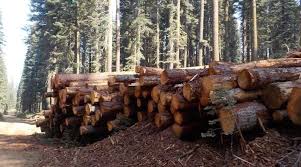
Plumas County’s timber industry, a longstanding economic cornerstone since the early 20th century, continues to thrive with major players like Sierra Pacific Industries (SPI) and Collins Pine Company leading the charge. Situated in Chester, Collins Pine Company and SPI’s Quincy sawmill are among the county’s largest employers, contributing significantly to the local economy.
Founded in 1949 by Curly and Red Emmerson in Arcata, California, SPI has grown to become the largest private landowner in the United States, managing over 2.4 million acres, predominantly in California. SPI acquired the Quincy sawmill in 1976, strategically located near timber supplies, making it ideal for operations, according to SPI spokesperson Mark Luster.
The Quincy facility operates two sawmills designed for different log sizes and employs about 300 people. It ships approximately 270 million board feet annually, enough to construct around 16,500 homes. The sawmill’s output is closely tied to the housing market, with “house starts” serving as a key industry performance indicator. After a downturn following the 2008 financial crisis, SPI shuttered its Quincy operations in 2009 but reopened the facility in 2010 after modernizing its operations for improved efficiency.
Despite a promising outlook for the timber industry, housing remains a pressing challenge, particularly for employee recruitment and retention. Wildfires have exacerbated a housing shortage in Plumas County, complicating efforts to hire locally. Many employees commute from neighboring areas such as Portola, Susanville, and even White Lake, Nevada. SPI is actively participating in county-wide efforts to address the affordable housing crisis, Luster noted.
SPI is committed to sustainable forest management, balancing timber supply with environmental stewardship. The company plants, on average, three trees for each one harvested and implements thinning practices to mitigate wildfire risks. Timber harvest plans, akin to environmental impact statements, are developed and approved by relevant agencies before implementation.
Recent collaborations between businesses and agencies aim to address wildfire risks through initiatives like creating fuel breaks across various land tenures, reflecting a growing awareness of the underlying issues.
SPI’s scale offers a competitive edge as the industry transitions from manual labor to machine-operated roles. The company’s in-house fabricator shop in Anderson develops custom machinery, reducing reliance on external vendors.
Despite technological advancements, SPI emphasizes its workforce as its greatest asset. Both Mark Luster and Quincy sawmill division manager Matt Taborski, who have long tenures with SPI, highlight the company’s commitment to employee development. Many employees, including Luster and Taborski, follow in the footsteps of family members in the lumber industry, underscoring a legacy of generational knowledge and commitment.
“We’re here for the long haul, and we want to be part of helping the community grow and prosper,” Luster affirmed. Taborski echoes this sentiment, viewing his work as a continuation of a legacy that preserves the forest for future generations.